how to eat your hydration the chinese way and why it helps support glowier skin and better digestion than water alone

Alice Sun (@alicecsun) shares a unique view into her life through the ways she uses food to nurture wellness, cross cultural divides, and bring people together, all through the medium of storytelling.

Alice Sun
•
February 2, 2026
Here’s the thing — Chinese baddies are constantly eating their hydration. It’s so engrained into the lifestyle that’s built upon Chinese medicinal principles, which is why you see the morning routines starting with hot water, congee, poached, not fried, eggs.
It wasn’t until later in life when I realized the Chinese way of eating hydration isn’t about drinking more water…it’s all about helping the body absorb it by cooking collagen-rich, fiber-dense, antioxidant ingredients with water!
And that’s why my body would immediately feel soothed after I’d start to eat my hydration: first it would ease my bloating, then immediately my skin’s dryness, inflammation would calm down. But when the eczema starts, that’s when you know I’ll really be making sure I’m eating my hydration across every meal, especially at breakfast.
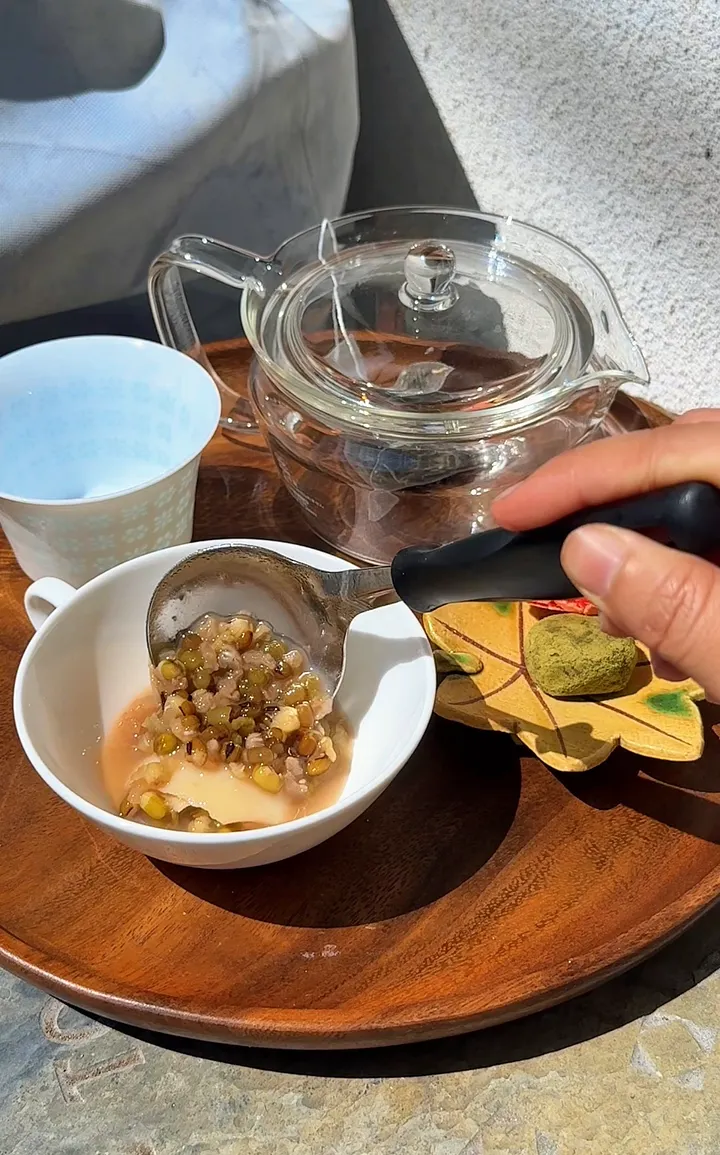
So now I always prep a batch of my grandma’s morning porridge, the perfect example of the Chinese way of eating your hydration, where it’s made with ingredients designed to hold onto absorb hydration.
This slow-simmered congee is traditionally made with a mix of grains, beans, seeds, and dried fruits. The exact combination always varies by family, region, and season, but the philosophy stays the same: combine ingredients that replenish hydration, and gently support digestion.
Here’s how to make a batch of it at home this winter season!
2 servings
Soak the adzuki beans (1 Tbsp), mung beans (1 Tbsp), coix seeds (1 Tbsp), black soybeans (1 Tbsp), wild rice (1 Tbsp), and lotus seeds (¼ cup) in water overnight in the fridge.
Rinse, wash, then place everything in a pot, including the dates (3) with water (6 cups).
Bring to a boil, then lower to a simmer, letting it do its thing on the stove for 2 hours.
At the end, the dates should be puffy soft to the touch and the beans should be soft enough to smush with your fingers.
Enjoy hot with a touch of honey and a splash of non dairy milk.
Leftovers can stay in the fridge for up to a week
Subscribe to get my new recipes delivered to your inbox
Sign in to comment